
Peruvian ginseng
Maca
Lepidium meyenii
Also known as: Peruvian ginseng · Maca peruana · Lepidium peruvianum · Maca · Lepidium meyenii · maka · maino · ayak chichita · ayak willku · ayak chichira · maca-maca · pepper grass · pepper weed · pepperweed · ginseng andin · ginseng péruvien · maca péruvien
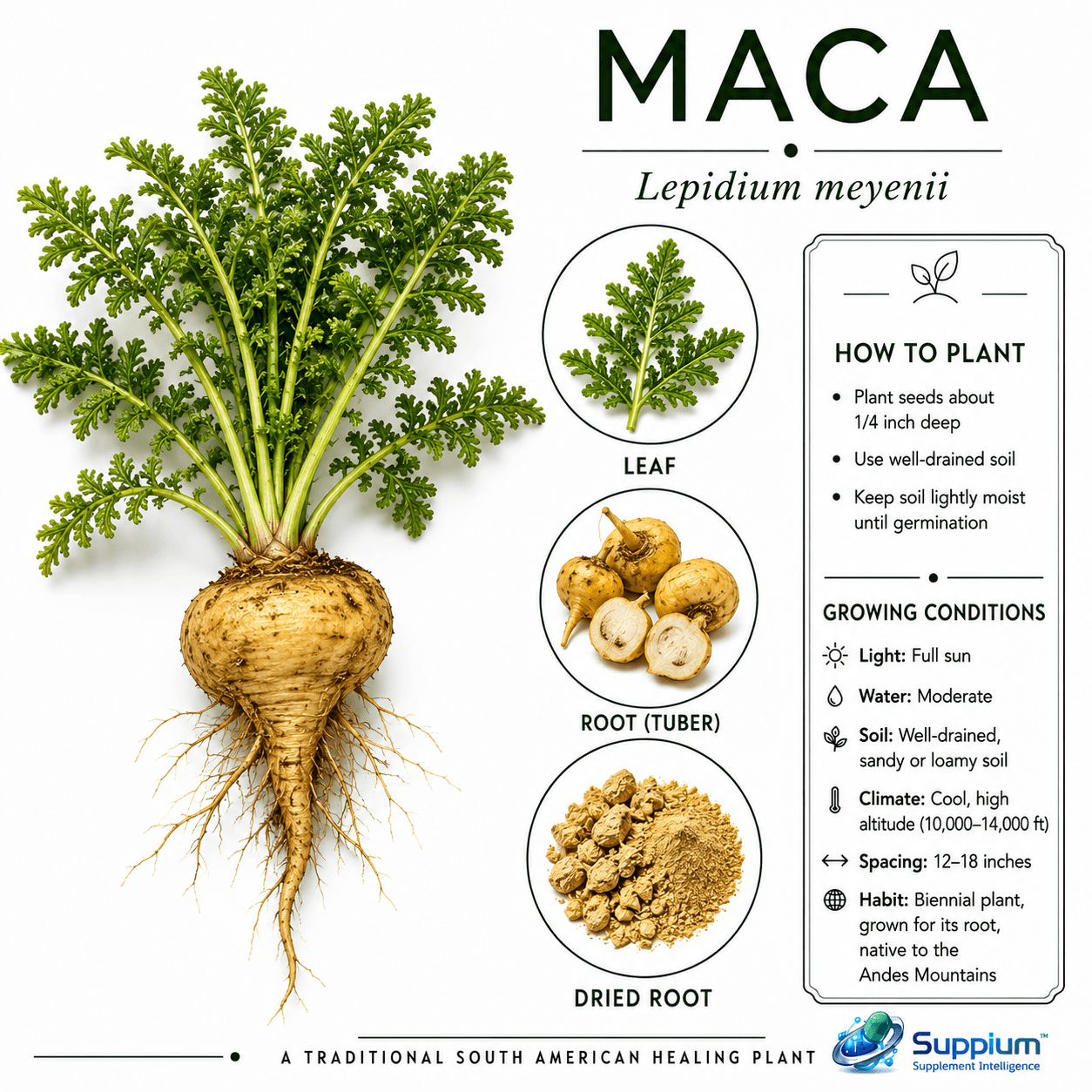
Maca is a cruciferous root vegetable native to the high Andes of Peru. It has been cultivated for over 2,000 years and used as both food and traditional medicine.
A. Identification
- Common Name (Localized by Country/Region)
- Peruvian ginseng
- Primary Common Name
- Maca
- Scientific (Latin) Name
- Lepidium meyenii
- Regional Names, Multilingual Names, and Modisms
- ES: Maca EN-CA: Peruvian-ginseng EN-US: Peruvian ginseng ES-PE: maca peruana FR-CA: ginseng péruvien FR-FR: ginseng péruvien QU-PE: ayak willku Also known as: Peruvian ginseng, Maca peruana, Lepidium peruvianum, Maca, Lepidium meyenii, maka, maino, ayak chichita, ayak willku, ayak chichira, maca-maca, pepper grass, pepper weed, pepperweed, ginseng andin, ginseng péruvien, maca péruvien
B. Origin and Cultural Context
- General Description
- Maca is a cruciferous root vegetable native to the high Andes of Peru. It has been cultivated for over 2,000 years and used as both food and traditional medicine.
- Origin and Cultural Context
- Country of Origin: Peru Geographic Origin: Peru, Andes Mountains, High Altitude Regions Region: Andean Traditional Regions: Central Peruvian Andes, Junín Plateau, Chinchaycocha/Lake Junín region, Pasco highlands, Andean Peru Tradition System: Latin American & Amazonian Plant Part Used: hypocotyl-root
Biological Role and Constituents
- Biological Role and Mechanism
- Maca's mechanism is not established as a single pharmacologic pathway. Plausible mechanisms include antioxidant activity from phenolics/polysaccharides and Brassicaceae glucosinolate-derived compounds, endocannabinoid-system modulation by macamides including FAAH inhibition in mechanistic studies, and possible neuroendocrine or mood-related effects that do not consistently translate into serum testosterone or estrogen changes in humans. Glucosinolates and isothiocyanates may contribute to biological activity, but these are mechanisms, not evidence that maca prevents disease. Human trials generally do not support a simple testosterone-boosting mechanism.
- Active Compounds and Key Constituents
- macamidesmacaenesmacaridinemaca alkaloidsglucosinolatesglucotropaeolinglucolimnanthinsinalbinglucolepigraminbenzyl isothiocyanatep-methoxybenzyl isothiocyanatebeta-sitosterolcampesterolstigmasterolbeta-carboline alkaloidspolysaccharidesessential amino acidsironcalcium
C. Benefits
- Evidence-Based Benefits
- Multiple human studies suggest benefits for energy, mood, and sexual function. One of the better-studied Peruvian botanicals. Various color varieties (yellow, red, black) may have different properties.
- Traditional / Historical Uses
- Traditional uses include energy support, stamina, fertility enhancement, and adaptation to high altitude. Consumed as a food and in beverages.
- Traditional Claims
- “Andean communities and historical sources have claimed that maca nourishes people living at high altitude, strengthens vitality, supports fertility in people and livestock, acts as an aphrodisiac, helps impotence or frigidity, regulates menstruation and menopausal changes, supports convalescence, and restores physical and mental capacity. These are historical and ethnobotanical claims and should not be interpreted as established clinical effects.”Note: Traditional claims are not necessarily supported by clinical evidence. See Evidence Breakdown below.
- Human Evidence Summary
- Human evidence exists but remains small and heterogeneous. A 2010 systematic review of maca for sexual function searched 17 databases and included four randomized clinical trials; two trials suggested benefit for sexual desire or sexual dysfunction, one trial in cyclists did not show an advantage for performance outcomes versus placebo, and the reviewers judged the evidence too limited for firm conclusions. In healthy men, a trial cited by Health Canada and LiverTox used 1.5 or 3.0 g/day gelatinized maca for up to 12 weeks and reported increased sexual desire without changes in testosterone or pituitary hormones. In mild erectile dysfunction, Zenico et al. randomized 50 men to 2,400 mg/day maca dry extract or placebo for 12 weeks and reported greater improvement in IIEF-5 and well-being scores in the maca group, although both groups improved. For SSRI-induced sexual dysfunction, Dording et al. conducted a small double-blind pilot using 1.5 and 3.0 g/day; the higher dose showed improvement on sexual function scales, while a later 45-woman trial of 3.0 g/day for 12 weeks found only modest or mixed benefits. For menopausal symptoms, a 2011 systematic review included four RCTs and found favorable signals but concluded that trial number, sample size, methodological quality, and safety data were too limited. For semen quality, a 2022 systematic review/meta-analysis included five RCTs and found unclear effects, with no significant increase in sperm concentration versus placebo in meta-analysis. A 2021 randomized trial in 50 infertile men over 16 weeks found no statistically significant semen-quality improvement versus placebo and no meaningful hormone benefit apart from a reported decrease in free testosterone.
- Preclinical Summary (In Vitro / Animal)
- Preclinical findings are not predictive of human outcomes. In vitro and animal studies report antioxidant, anti-inflammatory, antiviral, analgesic, neuroprotective, endocannabinoid-system-modulating, antidepressant-like, sexual-behavior, fertility, memory, prostate-size, and bone-related effects depending on extract, color ecotype, and model. Macamides have been investigated as fatty acid amide hydrolase (FAAH) inhibitors, and glucosinolates/isothiocyanates provide a plausible Brassicaceae-type phytochemical mechanism; these mechanisms do not prove clinical efficacy. Animal toxicology summarized by reviews and regulatory sources has not identified strong acute toxicity signals at tested doses, but Health Canada concluded that maca root extract safety data were insufficient for use as a supplemental ingredient in supplemented foods without more repeated-dose, genotoxicity, reproductive/developmental, blood-pressure, and interaction data.
- Limits of Current Evidence
- Most human studies are small, short-term, and use different maca colors, powders, gelatinized preparations, or extracts. Outcomes are often subjective sexual function, desire, mood, or symptom scales, with limited replication and variable placebo response. Semen-quality trials include both healthy and infertile men, creating heterogeneous populations and endpoints. Safety reporting is incomplete in older trials, and pregnancy, lactation, pediatric, long-term, high-dose, concentrated-extract, and interaction data remain thin. Preparations are not consistently standardized to macamides, glucosinolates, or other marker compounds, limiting comparison across studies. Some literature and commercial marketing make broad fertility, hormone, energy, or adaptogen claims that exceed the clinical evidence.
D. Contraindications and Safety Warnings
- Contraindications
- Generally well tolerated. Those with thyroid conditions should consult healthcare provider due to glucosinolate content.
- Warnings
- Quality varies significantly between products. Gelatinized form may be easier to digest.
- Known Side Effects
- LiverTox summarizes side effects as uncommon and mild, mainly gastrointestinal symptoms and headaches. Health Canada's monograph requires no known adverse reaction statement for licensed maca NHP labels. MSKCC states that side effects have not been reported in its consumer monograph, but this should be read in the context of limited trial size and incomplete long-term safety reporting.
- Toxicity Risks
- LiverTox states that maca has not been convincingly implicated in serum enzyme elevations or clinically apparent liver injury and assigns it an unlikely hepatotoxicity likelihood score, while acknowledging limited supplement-use data. Reported side effects in small trials are generally uncommon and mild, mainly gastrointestinal symptoms and headache. Health Canada found insufficient safety evidence for maca root extracts as supplemental food ingredients, requesting repeated-dose oral toxicity, genotoxicity, reproductive/developmental toxicity, blood-pressure, and drug-interaction data. Analytical reviews note potentially concerning beta-carboline alkaloids and substantial variability in secondary metabolites by ecotype, cultivation area, and processing, but clinical relevance at typical oral powder intakes is unclear. No authoritative tolerable upper intake level was identified.
- Pregnancy and Breastfeeding
- Health Canada requires a caution to consult a health care practitioner before use if pregnant or breastfeeding. MSKCC similarly advises pregnant or breastfeeding people to discuss maca with a healthcare provider because it may not be safe. Health Canada's supplemented-food decision requested reproductive and developmental toxicity data for maca root extracts, including for pregnant individuals and people trying to become pregnant, indicating that evidence is insufficient for concentrated extracts. No authoritative source consulted documented maca as an abortifacient or uterine stimulant.
- Children and Older Adults
- Health Canada's maca natural health product monograph applies to adults 18 years and older. Pediatric safety, dose, and developmental-toxicity data are inadequate, especially for extracts and frequent long-term intake. Older adults may be more likely to have blood pressure conditions, polypharmacy, anticoagulant/antiplatelet use, hormone-sensitive cancers, or planned procedures, so the main geriatric concerns are comorbidity and medication interaction uncertainty rather than a specific age-related toxicity signal.
- Regulatory Status
- United States: maca appears in NIH ODS dietary supplement label resources as a botanical ingredient used in dietary supplements; FDA's UNII record lists Lepidium meyenii whole as an ingredient substance and maps synonyms, but the UNII record explicitly does not imply regulatory review or approval. Canada: Lepidium meyenii is listed in the Natural Health Products Ingredients Database as an approved herbal name, and Health Canada has a monograph for oral adult natural health products using dried root/hypocotyl preparations with permitted antioxidant, sexual-health, and menopausal mood-balance claims and required cautions. Canada supplemented foods: Health Canada did not accept maca root extracts as supplemental ingredients in supplemented foods because available information was insufficient to establish acceptable conditions of use, while noting that maca root powder has a history of safe food use. European Union/EMA: no EMA/HMPC community herbal monograph was identified for maca. USP: an analytical review reports that USP has been developing a maca root powder monograph, but no final official pharmacopeial monograph was identified in the consulted sources.
E. Interactions (Mandatory)
How this supplement interacts with others. Always consult a healthcare provider before combining supplements.
- Drug Interactions
- Blood thinners: Health Canada advises consultation before use of products providing 0.6 g or more dried root/hypocotyl per day in people taking blood thinners; evidence appears precautionary and partly mechanistic rather than based on confirmed clinical bleeding cases. Antihypertensives or blood-pressure conditions: Health Canada advises consultation in people with blood pressure conditions, so additive or unpredictable effects with blood-pressure medicines are possible but not well proven. SSRIs/SNRIs: maca has been studied for antidepressant-induced sexual dysfunction, but Health Canada's supplemented-food decision specifically requested more information on drug-metabolizing enzymes and maca/drug interaction potential, including SSRI users; therefore interaction risk is insufficiently characterized rather than known to be absent. Hormone-related therapies: MSKCC cautions people with hormone-sensitive cancers that maca may affect treatment, although human trials do not show consistent estrogen or androgen elevation.
- Supplement Interactions
- No well-documented supplement-supplement interaction was identified from authoritative sources. Theoretical caution is reasonable with other supplements that may affect bleeding risk when maca is used at 0.6 g/day or more, because Health Canada advises caution with blood thinners; however, this is an extrapolation rather than a maca-specific supplement interaction. No specific nutrient antagonism or absorption competition was documented.
- Condition-Specific Interactions
- Hormone-Sensitive Risks: MSKCC advises people with hormone-sensitive cancers such as breast or uterine cancer to discuss maca with a healthcare provider because it may affect treatment. Human studies in men and postmenopausal women generally did not show consistent increases in testosterone, estrogen, or androgenic activity, but absence of hormone changes in small trials does not prove safety in hormone-sensitive cancers or during endocrine therapy. Other Condition-Based Risks: Blood pressure: Health Canada advises clinician consultation before use of products providing 0.6 g or more dried root/hypocotyl per day in people with a blood pressure condition. Bleeding/anticoagulant context: Health Canada advises consultation before use at 0.6 g/day or more if taking blood thinners; the evidence basis is precautionary and not proof of clinically important anticoagulation. Psychological disorders: for products marketed for mood balance or sexual health, Health Canada advises consultation in people with anxiety or depression. Liver disease: LiverTox rates maca as an unlikely cause of clinically apparent liver injury, but concentrated or adulterated products and combination products remain a general herbal-supplement quality concern. Renal, autoimmune, immunosuppression, and surgical risks: no specific maca-related evidence was identified beyond general supplement-use caution.
F. Dosage Ranges
- Traditional Dosage Range
- Traditional Andean intake was as a food rather than a standardized dose: dried hypocotyl-root was boiled, roasted, or ground into flour and eaten or made into drinks. A review summarized in LiverTox notes that native populations in the central Peruvian Andes have used naturally dried hypocotyls in amounts greater than 20 g/day as food practice, but this is historical dietary use and not a supplement recommendation. Historical livestock practices cited in Peru's WIPO document included feeding dry powdered maca to animals, but those amounts are not directly applicable to humans.
- Clinically Studied Dosage Range
- Published human studies and regulatory monographs most often used oral maca powder, gelatinized maca, or dry extract. Health Canada's monograph lists adult oral quantities of up to 3 g/day dried root/hypocotyl for antioxidant use, 2–3.5 g/day for healthy mood balance during menopause, and 3–3.5 g/day for sexual health, with consultation for use beyond 3 months at 0.6–3 g/day and beyond 6 weeks above 3 g/day. Trials cited by Health Canada and LiverTox used 1.5 or 3.0 g/day gelatinized maca for up to 12 weeks in healthy men. Zenico et al. used 2,400 mg/day maca dry extract for 12 weeks in men with mild erectile dysfunction. Dording et al. used 1.5 and 3.0 g/day maca root in an SSRI-induced sexual dysfunction pilot, and a later female antidepressant-induced sexual dysfunction trial used 3.0 g/day for 12 weeks. Brooks et al. used 3.5 g/day powdered maca for 6 weeks in postmenopausal women. Semen-quality studies vary in dose, preparation, and duration, commonly around 12–16 weeks; efficacy remains unclear.
- Route-Specific Evidence
- The human evidence base is almost entirely oral: powder, gelatinized powder/tablets, capsules, dry extract, tincture, decoction, or infusion. There is no meaningful clinical evidence base for liposomal, sublingual, inhaled/nebulized, intravenous, or injectable maca. Topical maca appears in some cosmetic or patent contexts, but it is not central to the supplement evidence base summarized here. Oral root powder should not be assumed equivalent to concentrated water or alcoholic extracts because extraction can alter constituent concentrations and safety profile. Non-oral clinical routes would be medical procedures if they existed; none are supported by the consulted maca evidence.
G. Formulations
- Available Forms
- CapsuleTabletPowderTinctureTea
- Preparation Methods
- powdercapsulegelatinizedextract
- Form Variants
- yellow macared macablack macagelatinized macaraw maca powdermaca dry extractmaca tincturemaca fluid extractwater extract of maca rootalcoholic extract of maca root
- Standardization Notes
- Commercial maca varies by plant color/ecotype, altitude and cultivation region, harvest age, drying method, gelatinization, extraction solvent, and marker-compound profile. Key analytical markers discussed in the literature include macamides such as N-benzylhexadecanamide, N-benzyl-(9Z,12Z)-octadecadienamide, and N-benzyl-(9Z,12Z,15Z)-octadecatrienamide, plus glucosinolates such as glucotropaeolin, glucolimnanthin, sinalbin, and glucolepigramin. Dried hypocotyls may contain higher macamides than freeze-dried material because post-harvest processing affects formation. Kew accepts Lepidium meyenii and treats Lepidium peruvianum as a synonym, but commercial labels may use either name, creating identity confusion. Finished products should be verified for botanical identity, heavy metals, microbial contamination, and undeclared pharmaceutical adulterants, especially in sexual-enhancement products.
H. Nutrient Role and Deficiency Context
- Food Sources
- Maca itself is a traditional Andean food crop. The edible portion is the swollen hypocotyl-root, eaten fresh or dried and processed into flour, porridges, boiled or roasted foods, and beverages. It is not a nutrient found broadly across unrelated foods; rather, it is consumed directly as maca root or maca-derived powder/flour.
- Bioavailability Notes
- Bioavailability data in humans are limited. Macamides are lipophilic and appear to increase or form substantially during traditional post-harvest drying, making drying and processing important for chemical profile. Gelatinized maca is a processed powder in which starch is cooked or removed to improve digestibility and concentration of some non-starch fractions, but it should not be assumed equivalent to all raw powders or extracts. Health Canada specifically notes that root extracts may concentrate constituents differently from powdered root, so safety and effects cannot be extrapolated automatically. No well-established absorption competitors, required cofactors, or food-timing rules were identified.
No recognised deficiency state applies to this substance, so deficiency information is intentionally omitted.
I. Citations to Public Research
Verified Sources
Research sources behind this entry, strongest evidence first. Traditional-use resources are labelled separately from clinical and regulatory sources.
- 1.Government / regulatoryRetrieved by research
Decision on maca root extract as a supplemental ingredient in foods
Health Canada
2024-08-15https://www.canada.ca/en/health-canada/services/food-nutrition/supplemented-foods/list-permitted-food-ingredients/information-ingredients-foods/decision-maca-root-extract.htmlSupports: Regulatory notes, Toxicity risks, Standardization & quality, Warnings & precautions, Limits of current evidence
- 2.Government / regulatoryRetrieved by research
Maca
National Institute of Diabetes and Digestive and Kidney Diseases; NCBI Bookshelf LiverTox
Last Update: April 10, 2019https://www.ncbi.nlm.nih.gov/sites/books/NBK548552/Supports: Scientific overview, Active compounds / key constituents, Traditional uses, Traditional preparation & dosage, Human evidence summary
- 3.Government / regulatoryRetrieved by research
Maca - Lepidium Meyenii
Health Canada
September 27, 2024https://webprod.hc-sc.gc.ca/nhpid-bdipsn/atReq?atid=maca.lepidium.meyenii2&lang=eng&wbdisable=trueSupports: Regional names by locale, Plant part used, Preparation forms, Evidence-based potential benefits, Clinically studied dosage
- 4.Government / regulatoryRetrieved by research
Maca (L. meyenii) for improving sexual function: a systematic review
BMC Complementary and Alternative Medicine
2010 Aug 6PMID 20691074B C Shin, M S Lee, E J Yang et al.https://pmc.ncbi.nlm.nih.gov/articles/PMC2928177Supports: Evidence-based potential benefits, Human evidence summary, Limits of current evidence, Evidence level, Clinically studied dosage
- 5.Government / regulatoryRetrieved by research
Maca (Lepidium meyenii) for treatment of menopausal symptoms: A systematic review
Maturitas
2011 NovDOI 10.1016/j.maturitas.2011.07.017PMID 21840656Myeong Soo Lee, Byung-Cheul Shin, Eun Jin Yang et al.https://pubmed.ncbi.nlm.nih.gov/21840656/Supports: Evidence-based potential benefits, Human evidence summary, Limits of current evidence, Clinically studied dosage, Functional tags
- 6.Government / regulatoryRetrieved by research
Maca (Lepidium meyenii Walp .) on semen quality parameters: A systematic review and meta-analysis
Frontiers in Pharmacology
2022 Aug 30DOI 10.3389/fphar.2022.934740PMID 36110519Hye Won Lee, Myeong Soo Lee, Fan Qu et al.https://pubmed.ncbi.nlm.nih.gov/36110519/Supports: Evidence-based potential benefits, Human evidence summary, Limits of current evidence, Evidence level, Functional tags
- 7.Government / regulatoryRetrieved by research
Subjective effects of Lepidium meyenii (Maca) extract on well-being and sexual performances in patients with mild erectile dysfunction: a randomised, double-blind clinical trial
Andrologia
2009 AprDOI 10.1111/j.1439-0272.2008.00892.xPMID 19260845T Zenico, A F G Cicero, L Valmorri et al.https://pubmed.ncbi.nlm.nih.gov/19260845/Supports: Human evidence summary, Clinically studied dosage, Evidence-based potential benefits
- 8.Government / regulatoryRetrieved by research
A double-blind, randomized, pilot dose-finding study of maca root (L. meyenii) for the management of SSRI-induced sexual dysfunction
CNS Neuroscience & Therapeutics
2008 FallDOI 10.1111/j.1755-5949.2008.00052.xPMID 18801111Christina M Dording, Lauren Fisher, George Papakostas et al.https://pubmed.ncbi.nlm.nih.gov/18801111/Supports: Human evidence summary, Clinically studied dosage, Evidence-based potential benefits, Drug interactions
- 9.Government / regulatoryRetrieved by research
Beneficial effects of Lepidium meyenii (Maca) on psychological symptoms and measures of sexual dysfunction in postmenopausal women are not related to estrogen or androgen content
Menopause
2008 Nov-DecDOI 10.1097/gme.0b013e3181732953PMID 18784609Nicole A Brooks, Gisela Wilcox, Karen Z Walker et al.https://pubmed.ncbi.nlm.nih.gov/18784609/Supports: Human evidence summary, Clinically studied dosage, Biological role / mechanism, Hormone-sensitive conditions
- 10.Government / regulatoryRetrieved by research
Evaluation of the effect of Lepidium meyenii Walpers in infertile patients: A randomized, double-blind, placebo-controlled trial
Phytotherapy Research
2021 NovDOI 10.1002/ptr.7287PMID 34585449Ingrid Melnikovova, Daniela Russo, Tomas Fait et al.https://pubmed.ncbi.nlm.nih.gov/34585449/Supports: Human evidence summary, Evidence-based potential benefits, Clinically studied dosage, Limits of current evidence, Active compounds / key constituents
- 11.Government / regulatoryRetrieved by research
A pilot investigation into the effect of maca supplementation on physical activity and sexual desire in sportsmen
Journal of Ethnopharmacology
2009 Dec 10DOI 10.1016/j.jep.2009.09.012PMID 19781622Mark Stone, Alvin Ibarra, Marc Roller et al.https://pubmed.ncbi.nlm.nih.gov/19781622/Supports: Human evidence summary, Evidence-based potential benefits, Clinically studied dosage, Functional tags, Limits of current evidence
- 12.Government / regulatoryRetrieved by research
Maca (Lepidium meyenii) as a Functional Food and Dietary Supplement: A Review on Analytical Studies
PubMed Central
https://pmc.ncbi.nlm.nih.gov/articles/PMC12840177/Supports: Active compounds / key constituents, Standardization & quality, Form variants, Bioavailability & absorption factors, Toxicity risks
- 13.Government / regulatoryRetrieved by research
LEPIDIUM MEYENII WHOLE
U.S. Food and Drug Administration
https://precision.fda.gov/uniisearch/srs/unii/94866V8426Supports: Aliases & vernacular names, Regulatory notes, Scientific / IUPAC name
- 14.Government / regulatoryRetrieved by research
maca (Ingredient) | Dietary Supplement Label Database (DSLD)
NIH Office of Dietary Supplements
https://dsld.od.nih.gov/ingredient/macaSupports: Canonical primary category, Dosage forms, Regulatory notes, Form variants
- 15.Government / regulatoryRetrieved by research
Exploring the chemical and pharmacological variability of Lepidium meyenii: a comprehensive review of the effects of maca
Frontiers in Pharmacology / PubMed
PMID 38440178https://pubmed.ncbi.nlm.nih.gov/38440178/Supports: Active compounds / key constituents, Biological role / mechanism, Preclinical evidence summary, Human evidence summary, Standardization & quality
- 16.Government / regulatoryRetrieved by research
Maca
National Institute of Diabetes and Digestive and Kidney Diseases; LiverTox
Updated: April 10, 2019https://www.ncbi.nlm.nih.gov/books/NBK548552/Supports: Toxicity risks, Warnings & precautions, Other condition risks
- 17.Government / regulatoryRetrieved by research
Drug-induced Liver Injury Due to Lepidium meyenii (Maca) Medicinal Liquor
PubMed Central
https://pmc.ncbi.nlm.nih.gov/articles/PMC5742932/Supports: Toxicity risks, Warnings & precautions, Other condition risks
- 18.Government / regulatoryRetrieved by research
FDA 101: Dietary Supplements
U.S. Food and Drug Administration
https://www.fda.gov/consumers/consumer-updates/fda-101-dietary-supplementsSupports: Regulatory notes, Warnings & precautions
- 19.Government / regulatoryRetrieved by research
Novel Food Catalogue of European Commission
Finnish Food Authority
https://www.ruokavirasto.fi/en/foodstuffs/food-sector/food-ingredients-and-contents/novel-foods/establishing-novel-food-status-of-a-food/novel-food-catalogue-of-european-commission/Supports: Regulatory notes
- 20.Government / regulatoryRetrieved by research
Risk assessment of maca-containing food supplements - BfR Opinion No. 024/2007, 3 April 2007
German Federal Institute for Risk Assessment (BfR)
3 April 2007https://www.bfr.bund.de/cm/349/risk_assessment_of_maca_containing_food_supplements.pdfSupports: Toxicity risks, Warnings & precautions, Limits of current evidence, Regulatory notes
- 21.Government / regulatoryRetrieved by research
Maca (Lepidium meyenii Walp.) on semen quality parameters: A systematic review and meta-analysis
Frontiers in Pharmacology
2022 Aug 30DOI 10.3389/fphar.2022.934740PMID 36110519Hye Won Lee, Myeong Soo Lee, Fan Qu et al.https://pmc.ncbi.nlm.nih.gov/articles/PMC9468664/Supports: Human evidence summary, Evidence-based potential benefits, Clinically studied dosage, Limits of current evidence, Standardization & quality
- 22.Government / regulatoryRetrieved by research
Efficacy and Safety of Maca (Lepidium meyenii) in Patients with Symptoms of Late-Onset Hypogonadism: A Randomized, Double-Blind, Placebo-Controlled Clinical Trial
World Journal of Men's Health
2023 JulDOI 10.5534/wjmh.220112PMID 36593713Dongho Shinhttps://pubmed.ncbi.nlm.nih.gov/36593713/Supports: Human evidence summary, Evidence-based potential benefits, Clinically studied dosage, Limits of current evidence
- 23.Government / regulatoryRetrieved by research
Effect of Lepidium meyenii (MACA) on sexual desire and its absent relationship with serum testosterone levels in adult healthy men
Andrologia
2002 DecDOI 10.1046/j.1439-0272.2002.00519.xPMID 12472620G F Gonzales, A Córdova, K Vega et al.https://pubmed.ncbi.nlm.nih.gov/12472620/Supports: Human evidence summary, Evidence-based potential benefits, Clinically studied dosage, Biological role / mechanism
- 24.Government / regulatoryRetrieved by research
A double-blind placebo-controlled trial of maca root as treatment for antidepressant-induced sexual dysfunction in women
Evidence-Based Complementary and Alternative Medicine
2015 Apr 14DOI 10.1155/2015/949036PMID 25954318Christina M Dording, Pamela J Schettler, Elizabeth D Dalton et al.https://pubmed.ncbi.nlm.nih.gov/25954318/Supports: Human evidence summary, Evidence-based potential benefits, Clinically studied dosage, Side effects, Limits of current evidence
- 25.Government / regulatoryRetrieved by research
Maca reduces blood pressure and depression, in a pilot study in postmenopausal women
Climacteric
2015 FebDOI 10.3109/13697137.2014.929649PMID 24931003L Stojanovska, C Law, B Lai et al.https://pubmed.ncbi.nlm.nih.gov/24931003/Supports: Human evidence summary, Evidence-based potential benefits, Clinically studied dosage, Hormone-sensitive conditions, Limits of current evidence
- 26.Government / regulatoryRetrieved by research
Andean Maca offers golden opportunities to producers in Peru
Food and Agriculture Organization of the United Nations
26/11/2020https://www.fao.org/mountain-partnership/news/stories/stories-detail/andean-maca-offers-golden-opportunities-to-producers-in-peru/enSupports: Traditional uses, Traditional preparation & dosage, Country / primary region of origin, Geographic origin detail, Traditional-use regions
- 27.Government / regulatoryRetrieved by research
View crop: Lepidium meyenii
FAO EcoCrop
https://ecocrop.apps.fao.org/ecocrop/srv/en/cropView?id=7220Supports: Aliases & vernacular names, Regional names by locale, Plant part used, Preparation forms, Traditional uses
- 28.Government / regulatoryRetrieved by research
The Effects of Maca (Lepidium meyenii Walp) on Cellular Oxidative Stress: A Systematic Review and Meta-Analysis
PubMed
PMID 39334705https://pubmed.ncbi.nlm.nih.gov/39334705/Supports: Preclinical evidence summary, Evidence-based potential benefits, Limits of current evidence
- 29.Academic / medical institutionRetrieved by research
Maca
Memorial Sloan Kettering Cancer Center
https://www.mskcc.org/cancer-care/integrative-medicine/herbs/macaSupports: Scientific / IUPAC name, Aliases & vernacular names, Biological role / mechanism, Preclinical evidence summary, Side effects
- 30.Academic / medical institutionRetrieved by research
Lepidium meyenii Walp.
Royal Botanic Gardens, Kew; Plants of the World Online
https://powo.science.kew.org/taxon/286286-1Supports: Scientific / IUPAC name, Aliases & vernacular names, Country / primary region of origin, Geographic origin detail, Geographic subregion
- 31.Academic / medical institutionRetrieved by research
Lepidium meyenii Walp.
Royal Botanic Gardens, Kew; Plants of the World Online
https://powo.science.kew.org/taxon/urn:lsid:ipni.org:names:286286-1Supports: Scientific / IUPAC name, Aliases & vernacular names, Country / primary region of origin, Geographic origin detail, Geographic subregion
- 32.Traditional / ethnobotanicalRetrieved by research
WIPO/GRTKF/IC/5/13: Patents Referring to Lepidium Meyenii (maca): Responses of Peru
World Intellectual Property Organization
https://www.wipo.int/edocs/mdocs/tk/en/wipo_grtkf_ic_5/wipo_grtkf_ic_5_13.pdfSupports: Aliases & vernacular names, Regional names by locale, Traditional-use regions, Traditional uses, Traditional claims
- 33.Traditional / ethnobotanicalRetrieved by research
Maca
Drugs.com / Wolters Kluwer Health
Nov 20, 2025https://www.drugs.com/npp/maca.htmlSupports: Aliases & vernacular names, Plant part used, Geographic origin detail, Traditional uses, Preparation forms
Recommended brand products
Curated product links, separate from SUPPIUM’s research references. A listing is not a medical endorsement; review the product label and consult a qualified healthcare professional when appropriate.
Gaia Herbs · Maca Root
View product pageRelated Herb & Botanicals
caffeine
1,3,7-trimethylpurine-2,6-dione
1,3,7-Trimethylpurine-2,6-dione is caffeine, a purine alkaloid and methylxanthine compound rather than a true herb. It occurs naturally in several botanicals, including coffee beans, tea leaves, cacao, kola nut, guaraná, yerba mate, guayusa, and yaupon, and it can also be manufactured and added to foods, beverages, medicines, and dietary supplements. Because the administrator-supplied term maps in NIH DSLD to a non-nutrient/non-botanical ingredient group, the canonical category is compound even though many commercial and traditional sources are botanical. Caffeine is widely used for wakefulness, alertness, and performance contexts, and it is also present in some weight-loss and sports-performance supplements. Human evidence is strongest for short-term effects on alertness and for modest improvements in some endurance or intermittent sports tasks when appropriately timed. Evidence for meaningful stand-alone weight loss is weaker because trials often use multicomponent stimulant formulas and short durations. Safety depends heavily on total intake from all sources, individual sensitivity, pregnancy status, medicines, cardiovascular or anxiety conditions, and product concentration. Pure or highly concentrated caffeine powders and liquids are a distinct safety concern because small measuring errors can be toxic or fatal.
Chanca Piedra
Phyllanthus niruri
Chanca Piedra ("stone breaker") is a small herb native to the Amazon rainforest. It has been used in traditional Brazilian and Peruvian medicine for urinary and liver support.
Chinese sage
Salvia miltiorrhiza Bunge
15,16-Dihydrotanshinone I, often shortened to DHT or DHTS and also called dihydrotanshinone I, is a lipophilic abietane diterpenoid belonging to the tanshinone family. Its formal chemical name is (1R)-1,2-dihydro-1,6-dimethyl-phenanthro[1,2-b]furan-10,11-dione, with CAS Registry Number 87205-99-0 and molecular formula C18H14O3. The compound is found naturally in the roots of Salvia miltiorrhiza Bunge, the traditional Chinese herb known as danshen or red sage. Danshen has been used clinically in China for centuries for a range of conditions, though 15,16-dihydrotanshinone I itself is studied primarily as an isolated research compound rather than as a traditional remedy. Most current knowledge about its biological activity comes from in vitro and animal studies. Human evidence specific to this isolated compound is essentially absent. The tanshinone class as a whole has documented in vitro and in vivo bioactivities, but these do not automatically translate to proven effects from taking the isolated compound.
Methoxydienone
13β-ethyl-3-methoxygona-2,5(10)-dien-17-one
13-Ethyl-3-methoxy-gona-2,5(10)-diene-17-one is a synthetic steroidal compound more commonly indexed as methoxygonadiene or methoxydienone. It is not an herb or botanical; NIH’s Dietary Supplement Label Database classifies it as a non-nutrient/non-botanical ingredient group, and FDA has described Max LMG/13-ethyl-3-methoxy-gona-2,5(10)diene-17-one on product labels as a synthetic steroid rather than a dietary ingredient. Chemically, it is a 13β-ethyl gonane steroid with formula C20H28O2 and is related in steroid scaffold to levonorgestrel-family progestins and 19-nor anabolic-androgenic steroids. It has appeared in bodybuilding products under the alias Max LMG, but controlled human trials of oral supplementation for muscle, strength, or health outcomes were not identified. Published human work is mainly forensic/toxicology-oriented and focused on detecting metabolites after very small oral exposure, not on performance or therapeutic use. Preclinical and modeling work suggests possible androgen-receptor relevance, but this should not be interpreted as a proven benefit. Safety concerns are substantial because steroid-like bodybuilding products and anabolic-androgenic steroids are associated with hepatic, cardiovascular, endocrine, reproductive, psychiatric, and thrombotic risks, and product identity/purity may be unreliable.